What a tower is
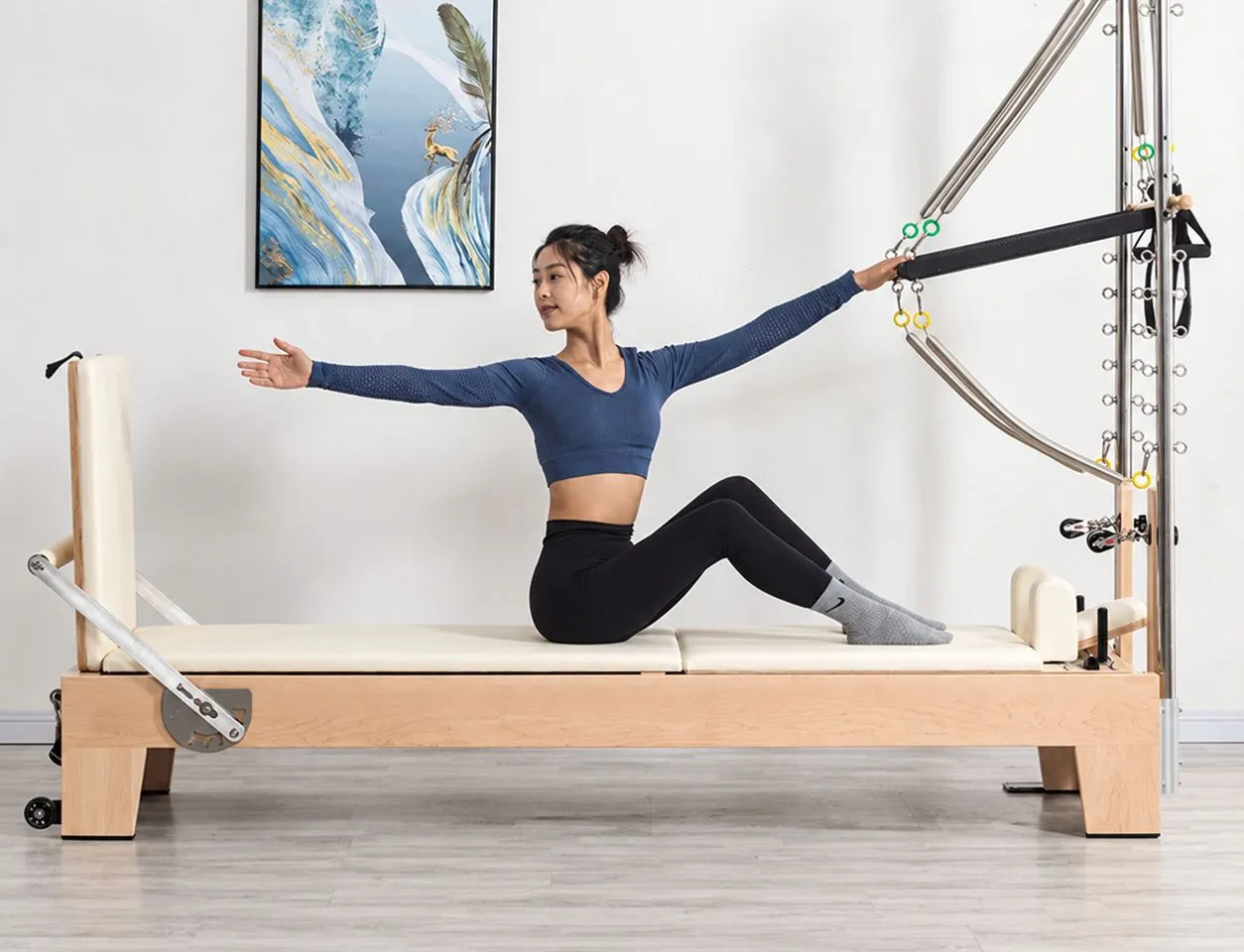
A half tower is an upright frame fixed to the head end of a reformer. Depending on the model, it carries a push-through bar, a roll-down bar and hooks for arm and leg springs, so you can add tower work on the same machine as your reformer sessions.
What it adds
- Push-through and roll-down work — spinal articulation and stretching with spring support from above.
- Arm and leg springs — longer, lighter springs for flowing arm and leg series.
- More variety — a second repertoire on the same footprint.
- Mat work with support — the springs can assist or challenge mat exercises.
What it costs you
- Height — our tower models stand about 184–203 cm (72–80 in) tall, so plan for a ceiling of at least 2.4 m (8 ft).
- Folding — a tower frame cannot be folded away the way a folding reformer can.
- Budget — a reformer with tower costs more than the same reformer alone.
Reformer, reformer with tower, or cadillac?
| Reformer | Reformer with tower | Cadillac / 3-in-1 | |
|---|---|---|---|
| Repertoire | Reformer | Reformer + tower | Reformer + full trapeze table |
| Height | Low | 184–203 cm | 198–212 cm |
| Folding | Folding models available | No | Ask us |
| Best for | Most homes, small rooms | Home practice that wants variety | Instructors, rehab-focused studios |
A full cadillac (trapeze table) adds a frame over the whole length of the bed, with a trapeze bar and more spring points. Our 3-in-1 models combine a reformer with a cadillac frame on one footprint.
Our take
If you are new to the reformer, a reformer on its own is the simplest place to start. If you already practice and want more variety at home — or you work with an instructor who uses the tower — the half tower is the upgrade most people get the most out of.